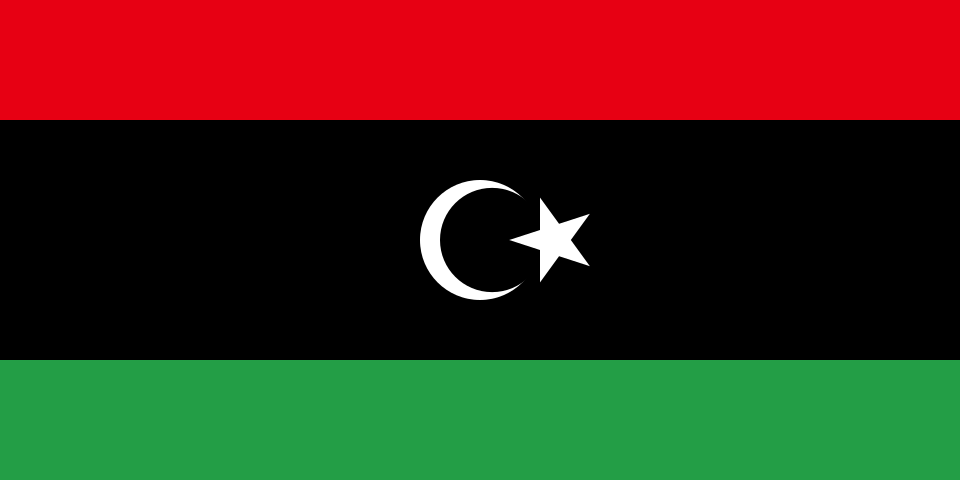
Libya CV Guide 2026
Navigating the Saharan energy giant: A strategic guide to the National Oil Corporation's (NOC) recovery, the multi-billion dollar reconstruction tenders, and Tripoli's evolving professional landscape.
Introduction to the 2026 Libyan Job Market
As of late 2026, Libya's labor market is defined by a massive surge in industrial reconstruction and energy expansion. With oil production hitting new post-conflict highs and political stabilization facilitating the unfreezing of billions in sovereign assets, Tripoli and Benghazi have become epicenters for multi-national engineering and infrastructure projects. The National Oil Corporation (NOC), along with its key production partners like Eni, TotalEnergies, and Repsol, remains the undisputed primary employer of professional talent in North Africa.
Applying for a role in 2026 Libya requires a "Bilingual Precision" CV. While the technical working language is increasingly English for international energy projects, Arabic remains the mandatory standard for all state-affiliated and governmental interactions. Success in this market is reserved for those who can demonstrate profound technical expertise alongside a high degree of cultural sensitivity and operational resilience. Whether you are a petroleum engineer targeting the Sirte Basin or a project manager for the Great Man-Made River reconstruction, your document must meet the rigorous benchmarks of a nation rebuilding its status as an energy superpower.
High-Growth Sectors in 2026
Growth in 2026 is concentrated in the energy-reconstruction nexus, with significant premiums for "Expatriate-Standard" technical skills:
- Upstream & Downstream Oil/Gas (NOC): The core of the economy. High demand for reservoir engineers, drilling specialists, and petrochemical plant managers.
- Civil & Electrical Infrastructure: Massive projects to rebuild the national power grid and urban infrastructure in Tripoli and Benghazi. Seeking EPC (Engineering, Procurement, Construction) experts and urban planners.
- Libyan Investment Authority (LIA) Projects: Strategic investments in telecommunications, real estate, and financial services are seeking asset managers and regulatory compliance specialists.
- Healthcare & Specialized Medicine: A critical shortage of surgeons and medical administrators is being met by high-tier expat recruitment from Egypt, Turkey, and Europe.
- Renewable Energy Integration: Libya has begun major solar initiatives to supplement the gas grid, seeking specialized solar PV engineers and micro-grid planners.
Real Salary & Compensation Benchmarks (2026)
Salaries in Libya are highly segmented. State roles are paid in Libyan Dinars (LYD), while international oil and construction contracts are mostly paid in US Dollars (USD).
Typical Monthly Gross Ranges (USD / Equivalent)
- Entry-Level Local Professional: 3,500 – 6,000 LYD
- Mid-Level Petroleum Engineer (Local NOC): 12,000 – 18,000 LYD
- Senior Expatriate Engineer (IOC): $5,000 – $10,000+ USD (Risk premium inclusive)
- EPC Project Manager (Reconstruction): $4,500 – $8,500 USD
- Specialist Surgeon (Private Sector): $6,000+ USD
*Note: In 2026, expat packages almost universally include secure compound housing, armed transport, and monthly R&R flights to Malta or Istanbul.
Top Job Search Platforms for Libya
Visibility in Tripoli requires a mix of official state portals and niche energy recruitment firms:
- NOC Official Portal (noc.ly): The primary repository for production subsidiary vacancies with Waha, Mellitah, and Agoco.
- Libya CV (Local Tech Startup): A growing platform specifically for private sector, tech, and administrative roles in the capital.
- LinkedIn (Libya): Instrumental for networking with international energy partners (Eni, Total) and Turkish construction firms.
- ReliefWeb: The standard for stabilization and rule-of-law roles with UN and international developmental agencies.
- Specialized Expat Recruiters: Airswift, Fircroft, and NES Fircroft remain the gatekeepers for high-level expat engineering roles.
Professional Hiring Practices & Culture
Libyan professional culture is a combination of rigid state hierarchy and deep-seated North African social networking.
- The Relationship Standard: Trust is the currency of the Libyan market. Initial hiring often relies on "Tawassul" (the Libyan version of Wasta/Connections). Even for technical roles, a referral from a known entity carries extreme weight.
- Interview Dynamics: Both technical and personal. Expect questions about your ability to manage teams in high-complexity, low-resource environments. Seniority is respected; use formal titles (e.g., Al-Mudir for Director) until directed otherwise.
- Linguistic Balance: While the technical world operates in English, the administrative world operates in Arabic. A bilingual CV (English/Arabic) is the absolute competitive standard for senior roles.
The 2026 Libyan CV (Životopis) Format
The standard Libyan CV should be a 2-page, technical-heavy document, ideally provided in both Arabic and English.
1. Personal Information & Technical Authorization
Transparency is required for security clearance and visa processing. Your header must include:
- Full Name (as per Passport)
- Nationality (Crucial for NOC security tiers)
- Professional Email & WhatsApp/Signal Details
- Current Residence and/or Readiness for Tripoli Rotation
- LinkedIn Profile URL
- Note on Photos: A formal, conservative photo is standard and expected for all Libyan applications.
2. Experience Section (Energy & Reconstruction Focus)
Recruiters in Tripoli's energy sector prioritized technical milestones over long descriptions.
- Energy: Specify your record with drilling depths, production optimization metrics, and HSE compliance (zero-incident rates).
- Reconstruction: Focus on project budget size, EPC lifecycle experience, and managing diverse sub-contractor teams.
- NGOs: Highlight stabilization metrics and stakeholder engagement within local municipal frameworks.
3. Education & Regulatory Certifications
Degrees from Tripoli University or Benghazi University are local benchmarks, but international specialized certs are mandatory for high-level roles.
- Clearly state your engineering or medical degree and the awarding institution.
- Include critical certs: NEBOSH (HSE), PMP (Management), or specialized Well-Control certifications for the oil sector.
- Language section: Clearly state levels for Arabic (Native/Fluent) and English (Professional working level).
ATS Optimization for NOC & International Firms
In 2026, recruiters at NOC subsidiaries and international EPC firms use ATS to scan for these high-value keywords:
- Upstream/Downstream Petroleum Management
- NOC Security Clearance Awareness
- HSE Management / NEBOSH / IOSH
- Bilingual: Arabic/English
- MENA Region Energy Projects
- Project Financial Discipline (USD management)
- Emergency Response & Stabilization Planning
Libyan CV Sample (Text Structure)
DO
- Provide your CV in both Arabic and English (essential for state roles).
- Highlight your previous MENA region or fragile-state experience.
- Stress your HSE certifications (Safety is the NOC's top priority).
- Be prepared for a long hiring cycle; patience is culturally valued.
DON'T
- Push too hard for immediate decisions (can be seen as disrespectful).
- Ignore the importance of personal references from within the sector.
- Failing to mention your specific work status or nationality.
- Use a generic CV that doesn't mention Tripoli or NOC-specific benchmarks.
Common CV Mistakes in Libya
- The English-Only Mistake: Applying to state-owned NOC subsidiaries without an Arabic translation.
- Ambiguous Risk Awareness: Failing to demonstrate that you understand and can operate within local security protocols.
- Lack of Technical Depth: Libyan energy recruiters want hard facts, not soft-skill platitudes.
- Missing Reference Quality: Providing references that aren't reachable or aren't relevant to the energy sector.
Cultural Note
In the Saharan professional world, success is built on "Saber" (Patience) and "Sidq" (Sincerity). During an interview, show that you are not only a technical expert but also a dedicated professional who respects Libya's cultural decorum and its path to stability. A balance of modern industrial precision and deep respect for traditional Arab business protocol is the most successful way to secure a top-tier role in Tripoli.
Ready to Excel in the Saharan Energy Hub?
Get noticed by the leading oil production companies, reconstruction firms, and energy giants in Libya with our localized, professional CV templates.